
Gem Core Recharging
Recharging
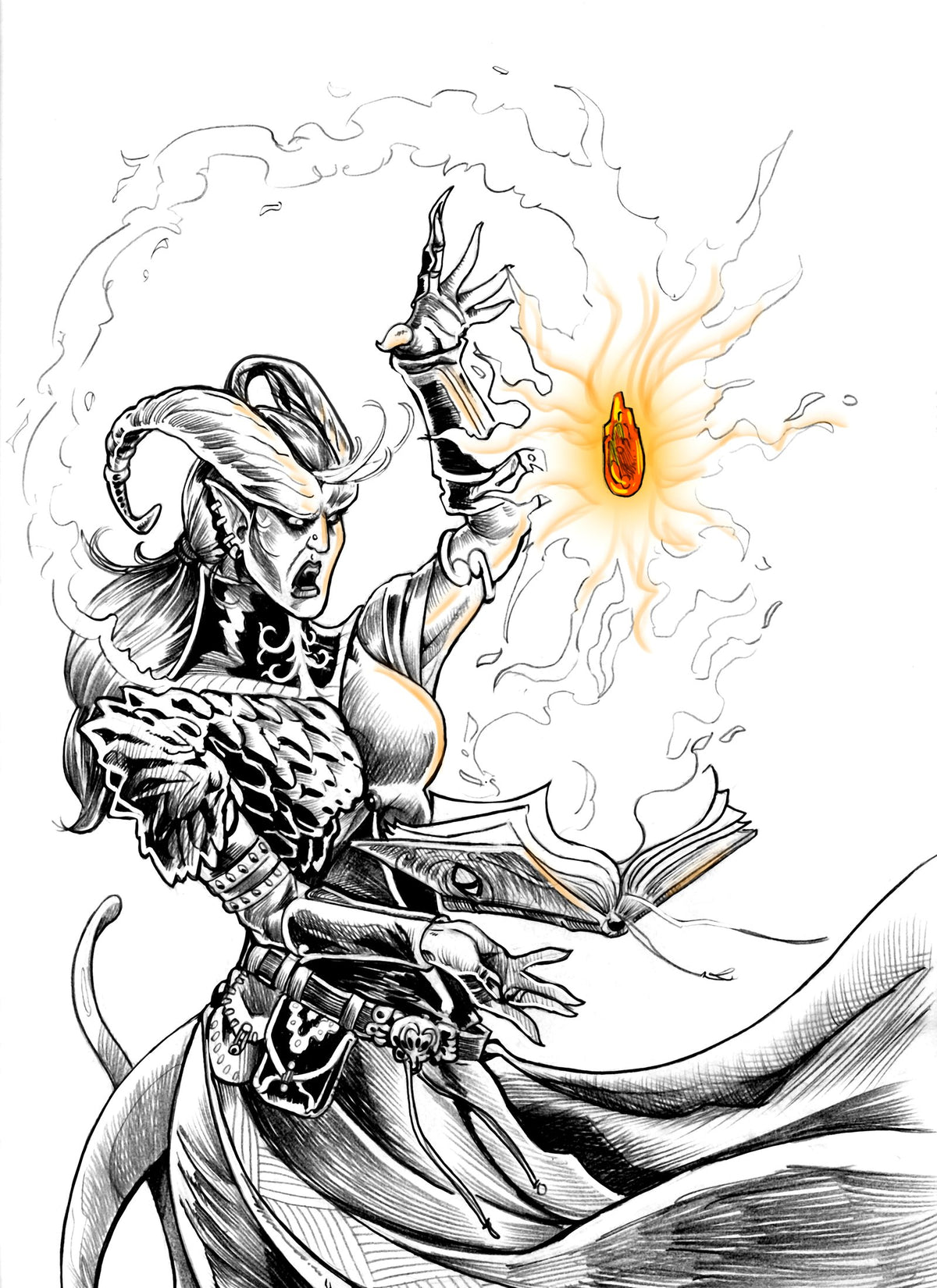
Essence: Fire Opal
Artwork by Oldman Xanditz
Where the magic comes back from
A gemstone does not refill by itself. Rest measures the time a recharge takes; it supplies no energy. To bring charges back you need two things: a source of magical energy, and a way to draw that energy into the stone. That is what keeps charges precious: a full gem means someone found a source and paid what it asked.
Only a Keystone recharges on its own: housed in its place, it draws from its surroundings and regains 2 charges at dawn as long as it still holds at least 6. Below that, even a Keystone needs help.
The methods are possibilities, not kinds of gem
Alchemy, portals, sacred renewal, a Keystone of the same nature: these are ways to recharge, not categories of stone. A Fire Opal formed in a volcano can still be filled by an alchemist, blessed at an altar, or set before a Keystone. A gem's origin tells you where its energy likes to come from; it does not lock the door on the others. The methods below are the ones written out; players and the Dungeon Master build their own from the same parts.
The shape every method shares
Every recharge method answers five questions: where does the energy come from (the source), how is it drawn in (the ritual), how long does it take (a short rest, a long rest, a vigil), how much comes back (the charges), and what does it cost or risk (ingredients, a promise, a creature stepping through). The written methods use the same scale so a Dungeon Master can set a new one beside them:
| Time spent | Charges regained |
|---|---|
| A short rest at the source | 1 |
| A long rest at the source | 2 (not 1 + 2) |
| The final push: one more short rest, forcing the source | the gem fills to capacity, with a risk roll |
A gem never goes above its capacity (D4 4, D6 6, D8 8, D10 10, D12 12, Keystone 20).
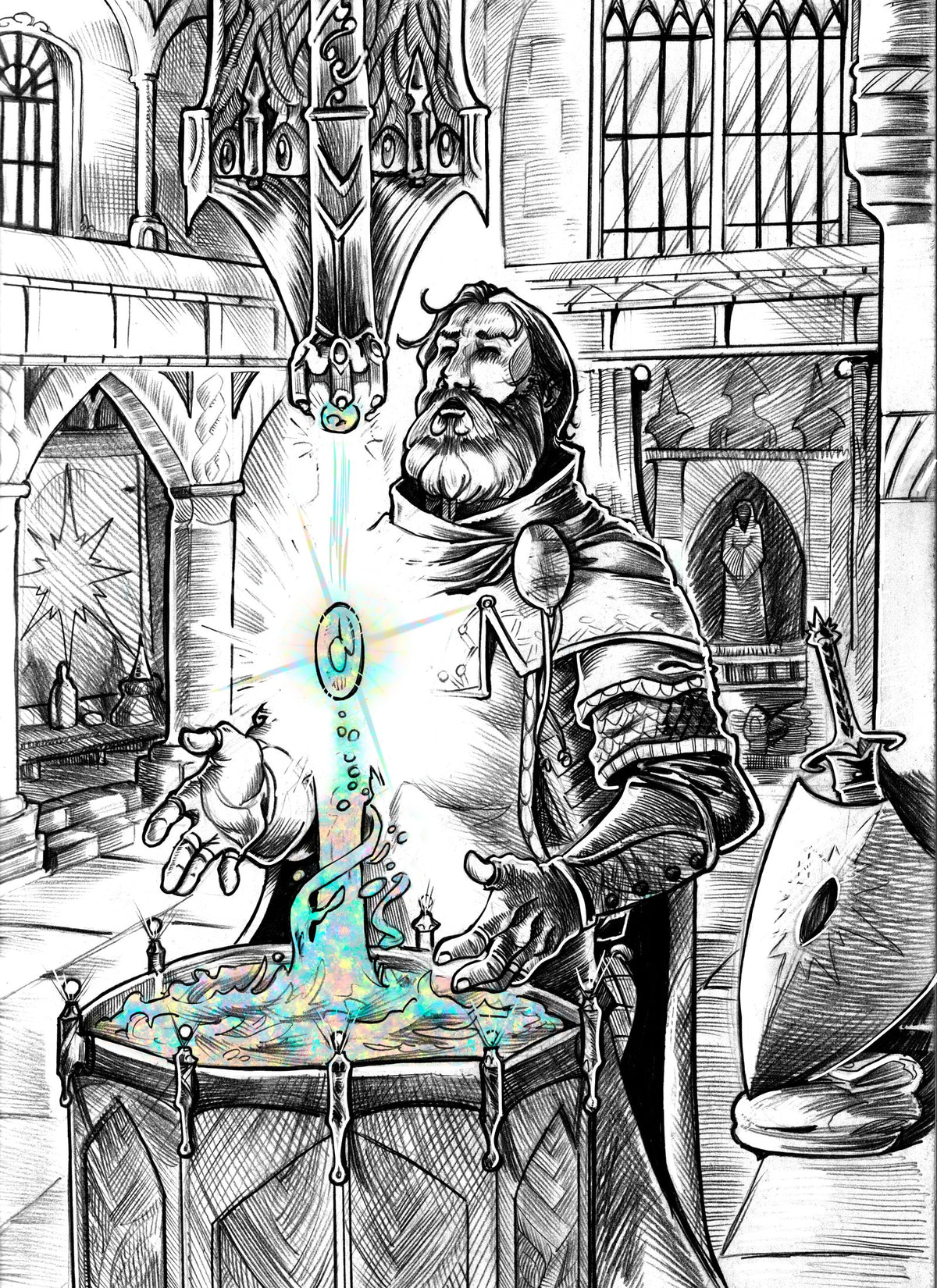
Essence: Paladin's Oath Crystal
Artwork by Oldman Xanditz
Sacred renewal: the Paladin's Oath
The Paladin's Oath Crystal draws strength from devotion, promises kept and deeds done. All of it happens at a consecrated temple or holy site of the paladin's deity or oath.
- Short prayer: a short rest in prayer restores 1 charge.
- Long vigil: a long rest in vigil restores 2 charges (not the prayer charge as well).
- Fulfilled oath: before a deed, the player and the Dungeon Master agree on a meaningful goal tied to the oath. When it is done, a short rest renewing the oath at the site restores the gem to full. Each completed deed grants this once; making or repeating a promise grants nothing.
- Broken oath: breaking the oath closes this road until the paladin completes an act of atonement that the player and the Dungeon Master set together.
There is no mishap roll in sacred renewal: the risk is the oath itself. Other Divine gems follow this model at the altar of their own god.
Example. Ser Odile's D6 Oath Crystal holds 1 charge after a hard week. She promised the abbot she would see the pilgrims through the pass; she does, loses a horse doing it, and spends a short rest at the mountain chapel renewing her oath. The gem fills to 6. Had she turned back, the chapel would have given her 1 charge for a prayer, 2 for a night's vigil, and nothing more until she atoned.
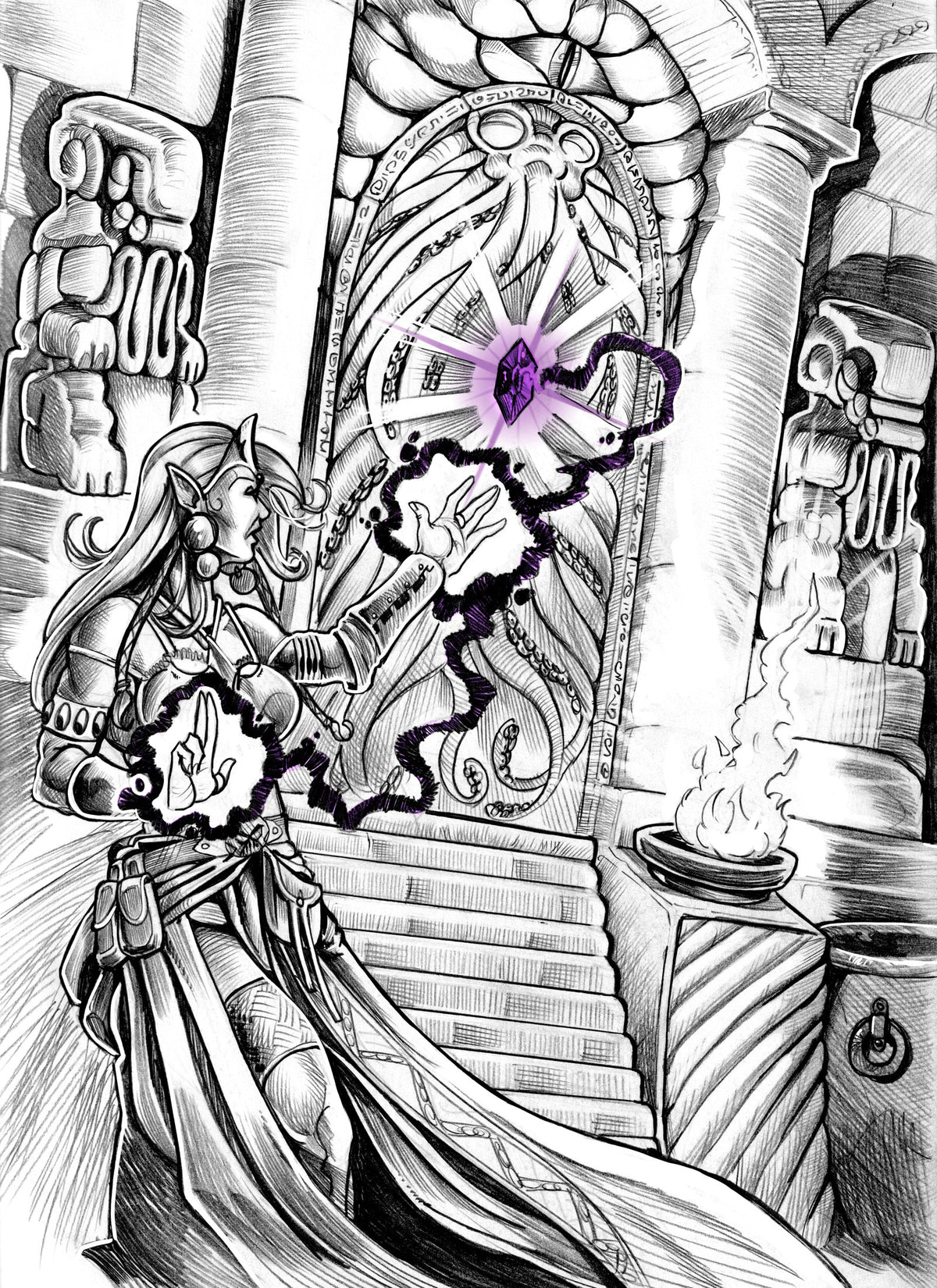
Essence: Eldritch Opal
Artwork by Oldman Xanditz
Portal charging
A gem can be held in the current of an open portal and drink the energy of the crossing. The Eldritch Opal is the first example; any portal the Dungeon Master allows can serve, and whether a given gem and portal agree is the Dungeon Master's call.
- A short rest at the portal restores 1 charge; a long rest restores 2.
- Portal overcharge: once the gem holds at least 3 charges, the bearer may force the portal wider and stand in it for one more short rest, channelling. The gem fills to capacity. Roll 1d6: on a 1–2 something comes through, chosen by the Dungeon Master; on a 3–6 nothing does. The charges arrive either way. The danger is in forcing the door, not in the hour of the day.
Example. Tamsin's Vortex Core has 3 charges. A ley-rift in the ruins is open for the night. Two long rests would bring it to 6 with no risk; she has one night. She takes the long rest (5 charges), then forces the rift for a short rest: the Core fills to 6 and the Dungeon Master rolls a 2. Something steps out of the rift behind her.
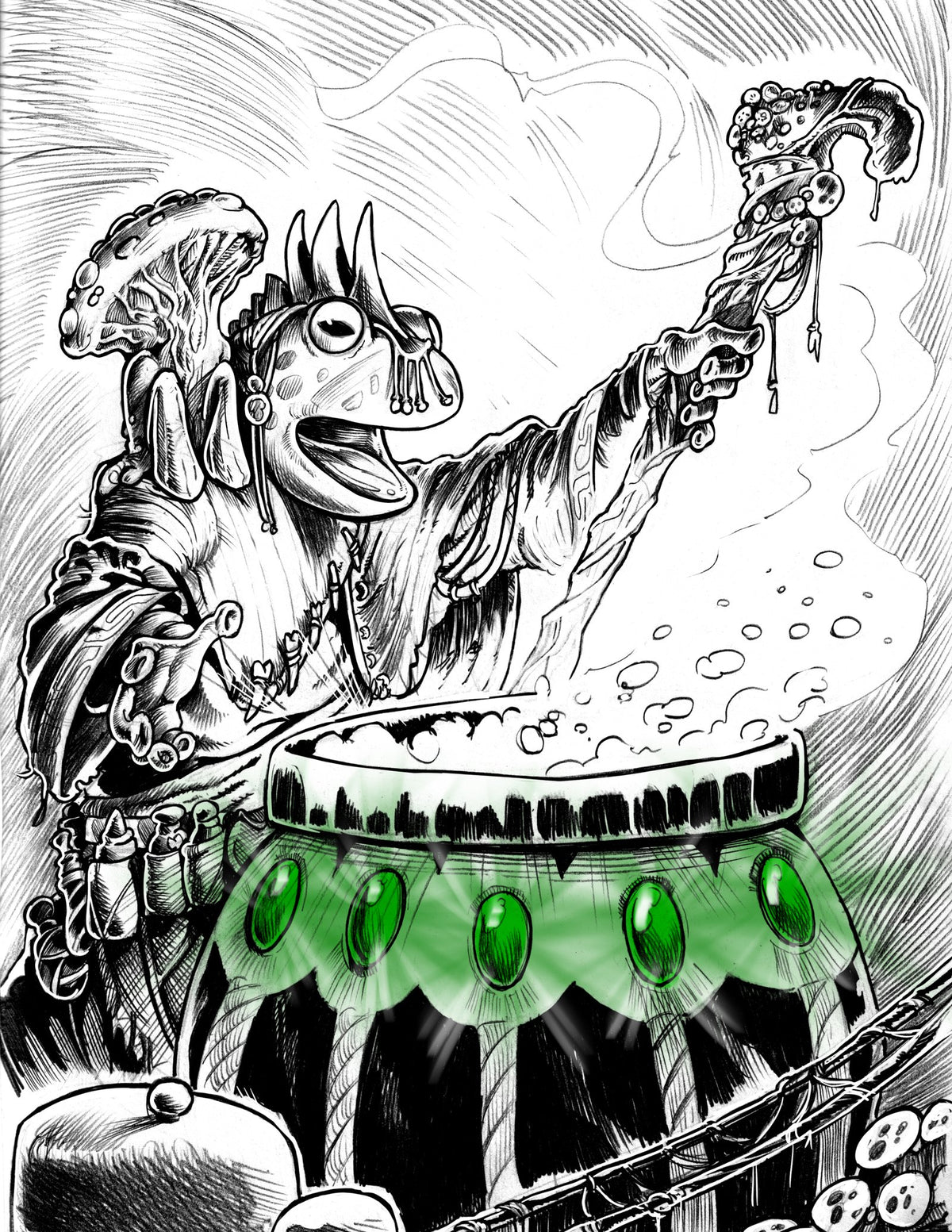
Essence: Verdant Opal
Artwork by Oldman Xanditz
Alchemical charging
An alchemist can brew a gem's energy back into it. The cauldron is the source; the brewer's craft is the ritual; the reagents are the cost.
- For 25 gp of ingredients: a short rest of brewing restores 1 charge safely; a long rest restores 2 safely.
- The strong brew: after the long rest, the brewer may spend a further 25 gp on stronger reagents and tend the cauldron through one more short rest. The gem fills to capacity. Roll 1d6: on a 1–2 the brewer takes a side effect; on a 3–6 nothing happens. The charges arrive either way.
- Side effects follow the gem's energy, because the brewer has absorbed some of it: a fire gem leaves the brewer glowing and radiating heat; a frog gem gives a croaking voice; an eldritch gem brings whispers no one else hears; the worst result is an uncontrolled burst of that energy. The Dungeon Master sets severity and duration from the gem's nature.
Example. Hokus the frog-folk shaman brews for a Verdant Opal at 2 charges. Twenty-five gold of rootwater and moss ash and a long rest bring it to 4. He spends another twenty-five, stirs through a short rest, and the Opal fills to 6; the roll is a 5, so vines merely curl from the hut's thatch for a day.
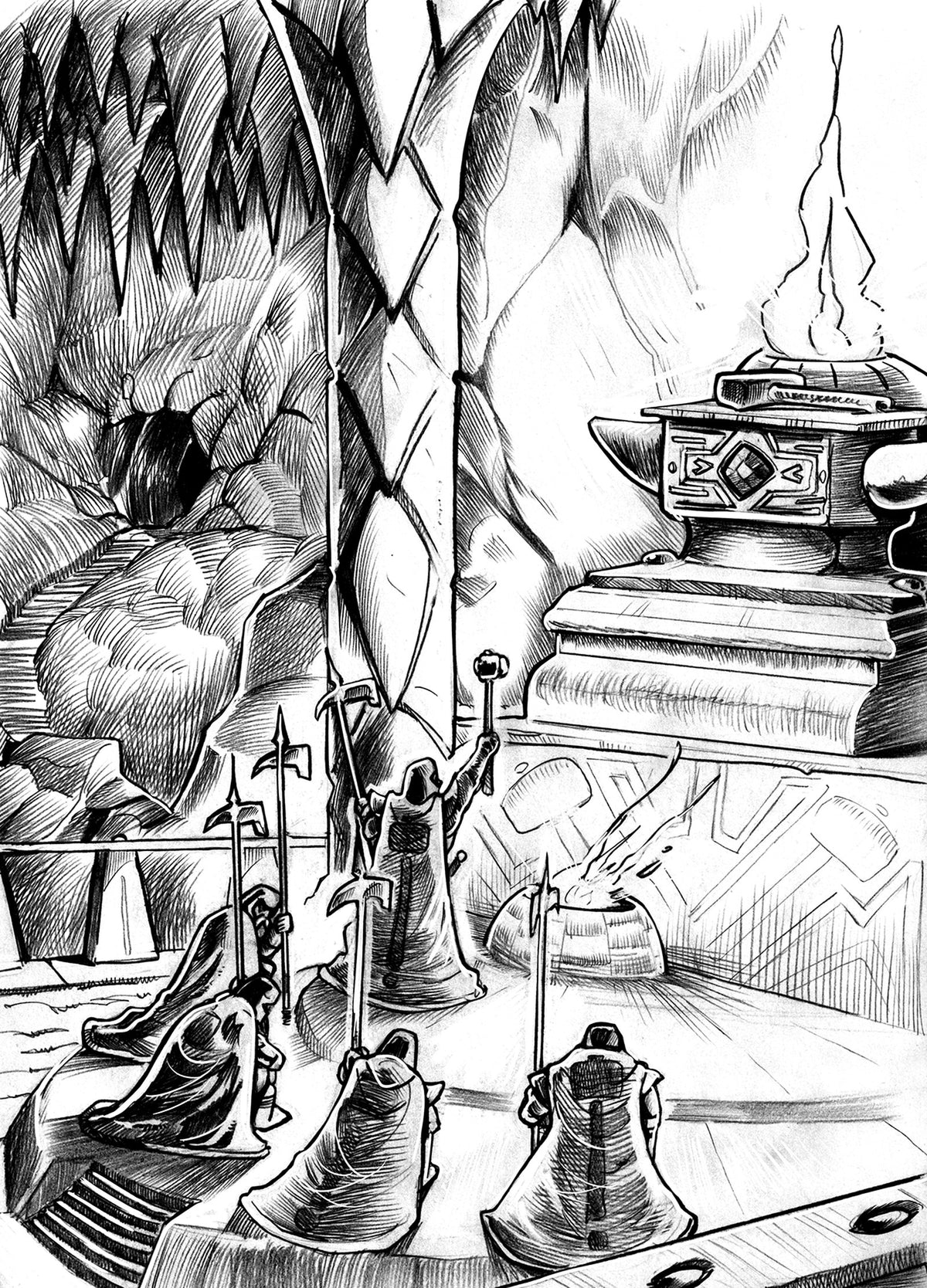
Essence: Sacred Opal
Artwork by Oldman Xanditz
A Keystone of the same nature
A Keystone can recharge a gemstone of its own nature as one of its services, once per long rest, outside its petition roll. Set the gem before the Keystone and stay with it: a short rest gives 1 charge, a long rest 2, and one more short rest asking the Keystone for everything fills the gem. Every charge the gem gains leaves the Keystone's own pool. This is the quiet way, no cauldron, no portal, no roll, but you have to reach the Keystone, and a Keystone drained below 6 stops renewing itself at dawn.
Example. The Sacred Opal Keystone in the abbey crypt holds 14. A pilgrim sets her Sacred Opal (D6, 1 charge) before it through a long rest, then asks for the rest: the Opal fills to 6, the Keystone drops to 9, and at dawn it regains 2.
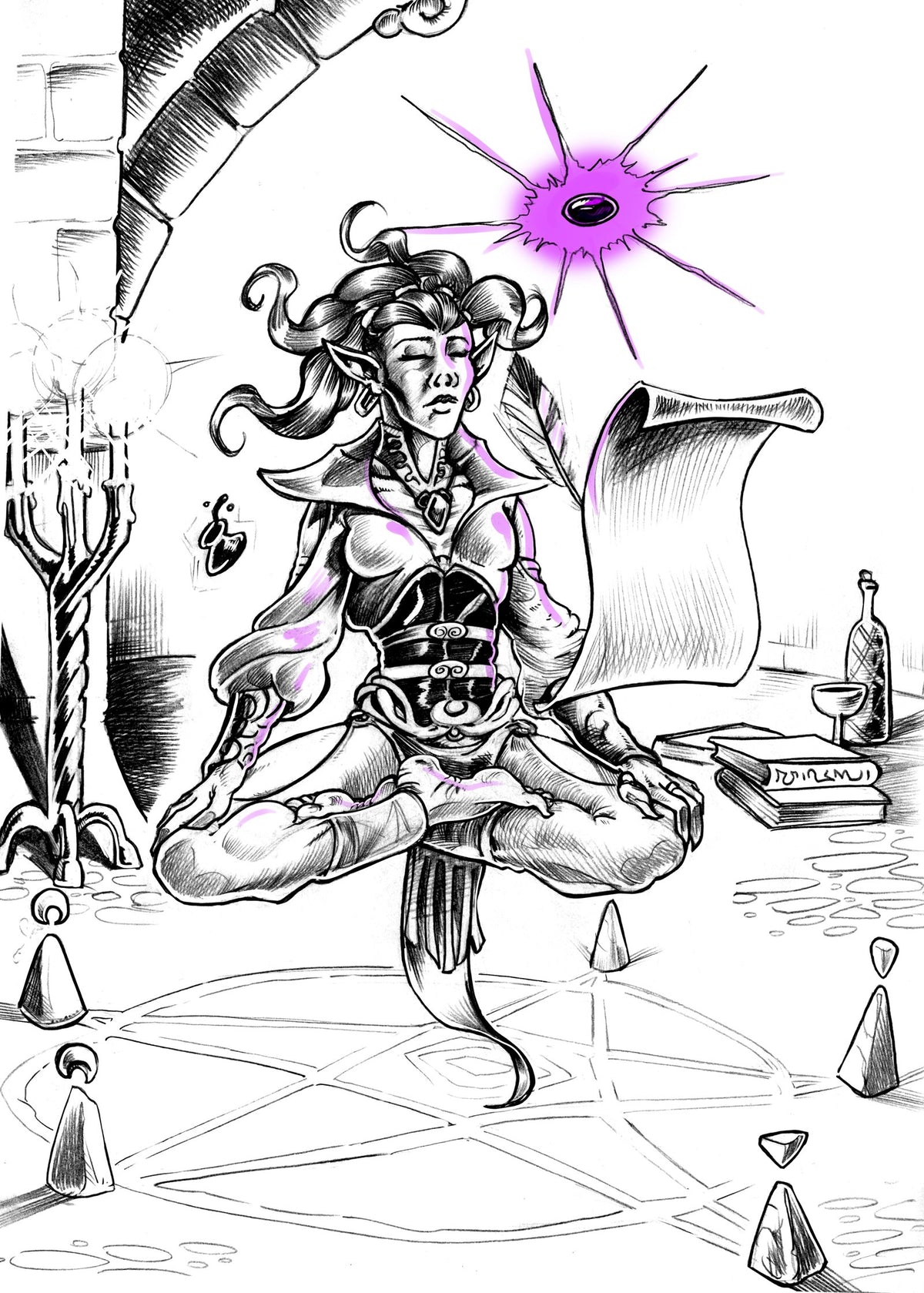
Essence: Mystic Opal
Artwork by Oldman Xanditz
Pouring a spell into the stone
A spellcaster can give a gem the magic directly. Sit with the stone for a 10-minute meditation and spend one spell slot: the gem regains charges equal to the slot's level, a 3rd-level slot giving 3, never above its capacity. Once per long rest. There is no roll and no risk; the cost is the spell you will not cast today.
Example. A githzerai monk-mage carries a Mystic Opal (D6) at 2 charges and has a 4th-level slot left. Ten minutes of meditation in a quiet circle: the slot is gone and the Opal holds 6.
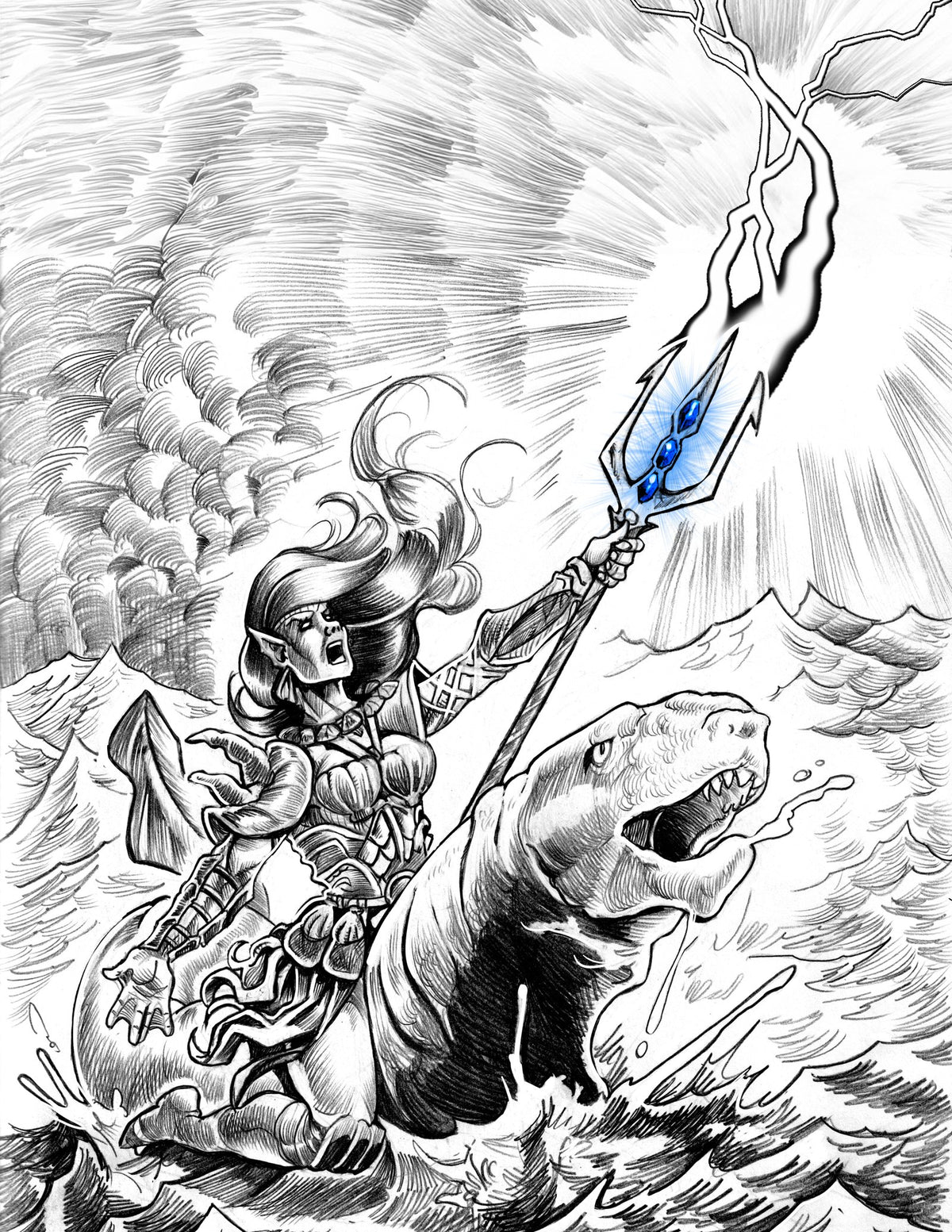
Essence: Tempest Opal
Artwork by Oldman Xanditz
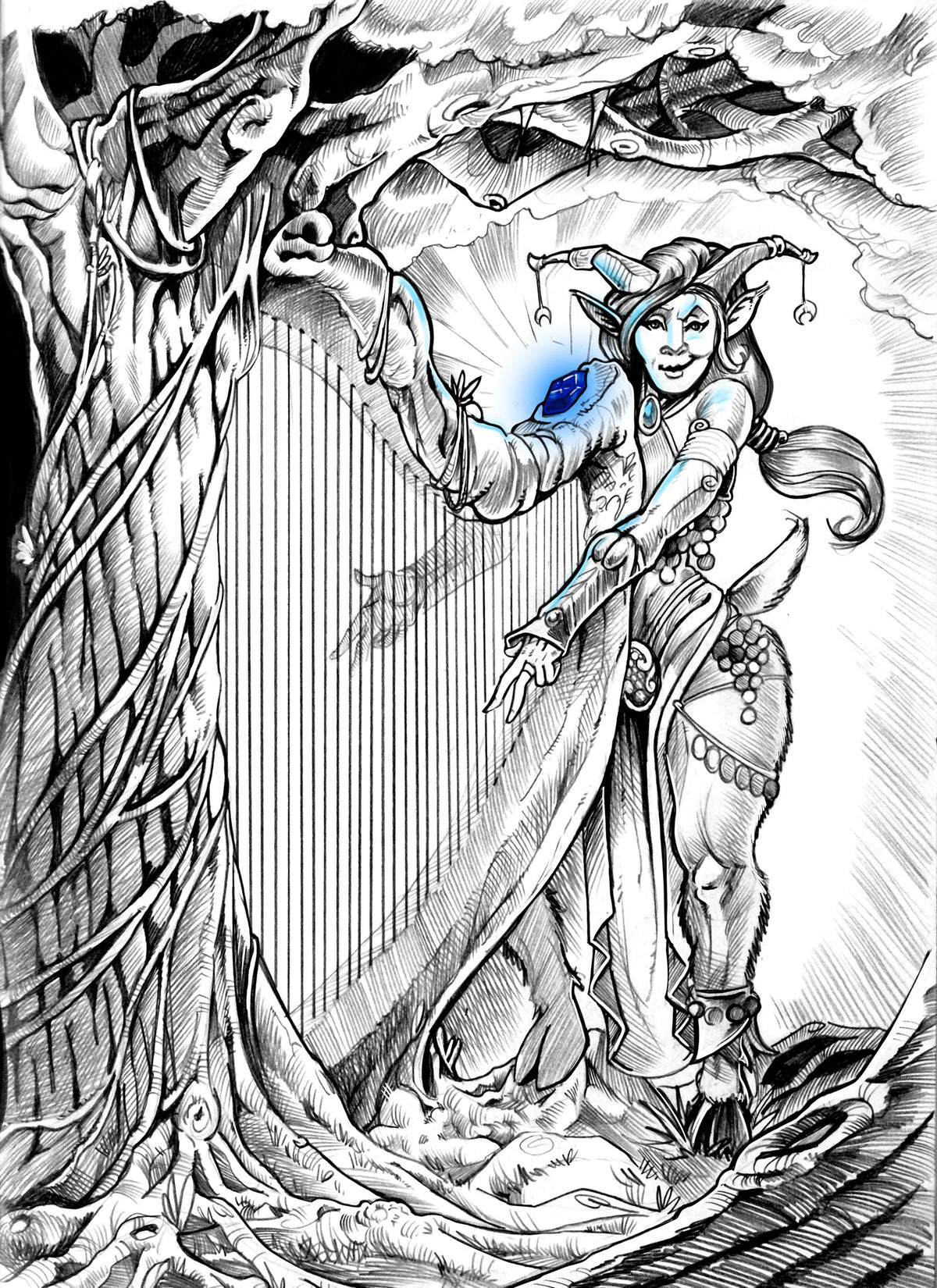
Essence: Chromatic Garden Crystal
Artwork by Oldman Xanditz
Building your own method
Use the five questions and the table. A pact with a being gives energy in exchange for a service or a promise without turning the gem into a "pact gem". A storm, a volcano's heat, a king tide; a ley line, an enchanted spring, an ancient shrine; an offering of something rare or something that matters; a shared ritual of song, prayer or spellcraft; an eclipse or an alignment: each is a source. Give it a ritual, a time, the charges from the table, and a cost or a risk worthy of what it returns.